
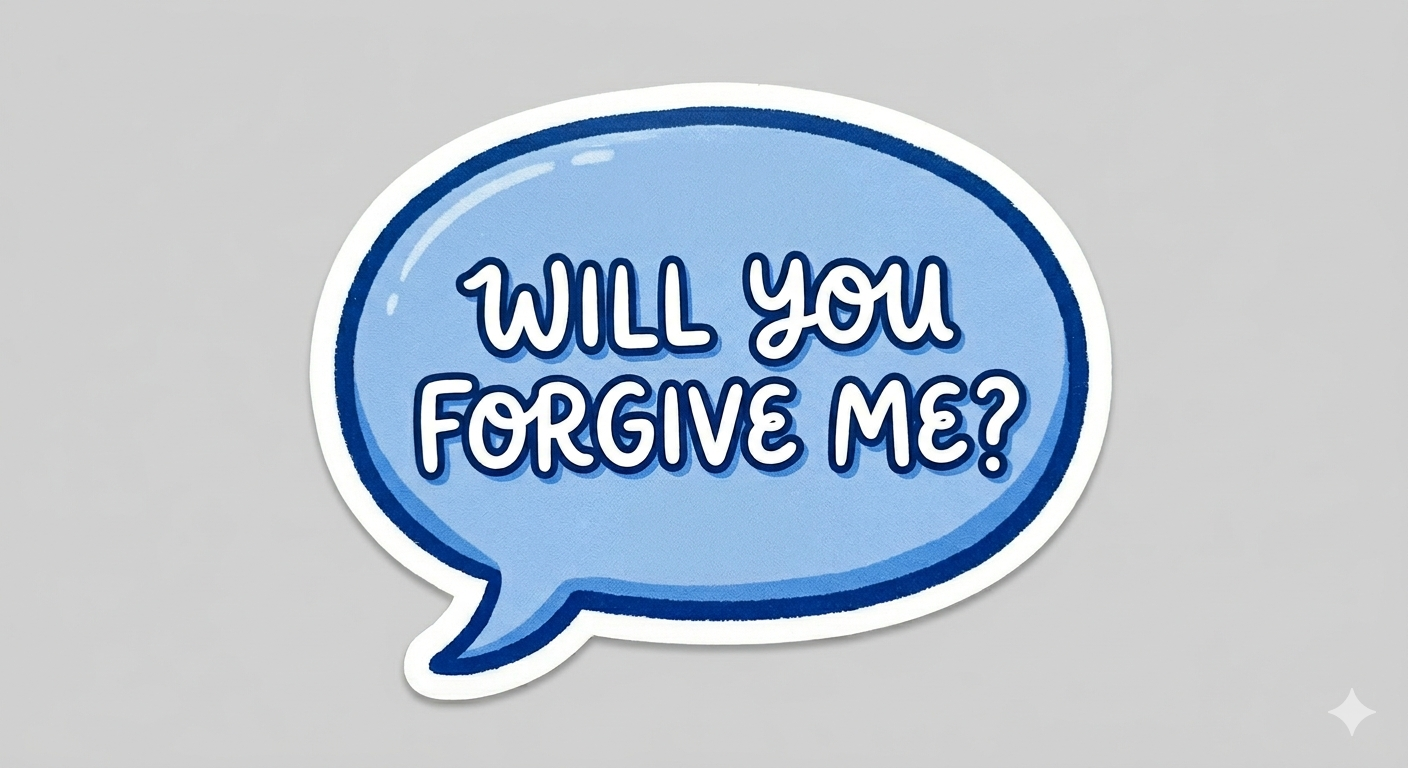
Four of the most powerful words in the world are “Will you forgive me?”
We all mess up. We make mistakes. We hurt those we care about, whether they are friends, family members, or coworkers. The damage might be small or significant.
When handled well, asking for forgiveness can begin to heal and repair the damage we have created. In many cases, the repaired relationship can be stronger than it was before because of how we handled our mistakes.
Unfortunately, asking for forgiveness is not always handled well. Often, it is seen as a shortcut to smoothing over an argument. When done poorly, however, it can make things worse.
Before getting to how to ask for forgiveness, it is important to understand what asking for forgiveness is and is not.
WHAT ASKING FOR FORGIVENESS IS AND IS NOT
Asking for forgiveness is a confession of wrongdoing or fault and a request for the debt (emotional, relational, financial, etc.) to be released.
Asking for forgiveness is not simply expressing how you feel about the other person’s feelings. We have all heard forced, fake public apologies by celebrities. “I am sorry if some of my statements bothered some people…” That isn’t asking for forgiveness. That does nothing toward the repair and healing of real hurt. If anything, it makes things worse because it is self-centered. Don’t do it.
Asking for forgiveness does not mean you are completely at fault. Sometimes, we are. There are times when it might be all our fault. However, many times both parties have made contributions to the hurt and damage that has happened. In those cases, you are only asking for forgiveness for your part.
Asking for forgiveness does not mean the other person will (1) forgive you, or (2) ask for forgiveness in return.
Do you want their forgiveness? Of course. But they might not be willing or able to offer it when you ask.
Will they ask for your forgiveness for their part of the mess? Maybe, but again, they might not be able or ready to do that when you ask.
You are not asking for their forgiveness to manipulate their behavior. You are asking for their forgiveness because you have done something wrong, you owe them a debt, and you want to be released from it.
We cannot control people, nor should we try. We should do what we know we should do. Sometimes, when we do our part, it will help others do their part, but not always. When you have done all you can do, you can move forward with a clear conscience, whether the other person responds or not.
All you can do is all you can do. And that is usually enough.
HOW TO ASK FOR FORGIVENESS
There are four main parts in asking for forgiveness:
1. State what you did. Ex. “When I got upset, I yelled at you.”
2. Admit it was wrong. Ex. “That was wrong. There is never a reason for me to yell at you.”
3. Commit to doing better going forward. Ex. “I will not yell at you again.”
4. Ask for their forgiveness. Ex. “Will you forgive me?”
It is as simple and as difficult as that.
Simple because that is all that needs to be said.
Difficult because that is all that needs to be said. If said honestly, it is a vulnerable feeling, as it should be. You have done some harm, and you are humbly asking the other person to absorb it and no longer hold it against you. That is a big deal.
No explanations or justifications should be added. Usually, they are unnecessary and sound like excuses to reduce your guilt. They sound like reasons that it isn’t your fault you did what you did or said what you said. But it is your fault that you did what you did or said what you said. Accept full responsibility and leave it at that.
There are times when there are legitimate contributing factors to why you might have done/said what you did. If those really do need to be addressed, my experience is that they are best addressed outside of asking for forgiveness. Come back to them later.
WHEN TO ASK FOR FORGIVENESS
When should you ask for forgiveness? When you mean it.
Don’t ask for forgiveness because things are difficult or awkward, and you want to smooth it over.
Don’t ask for forgiveness if you don’t think you did anything wrong.
People can tell whether your request is real or fake.
Once you mean it, ask for forgiveness as soon as you can. Don’t let things fester. The longer they fester, the worse things will be when you deal with them.
We are all human. Incredible, wonderful, beautiful, but broken people. Because most of us have messed things up before, we understand that other people do, too. Sometimes with us. That is why most people are quick to forgive when asked.
So… who do you need to ask for forgiveness? When are you going to do it?
P.S. Did you find this post helpful? If so, I have two quick requests:
— First, would you subscribe to the blog? It is an encouragement to me.
— Second, who is one person you think would also benefit from this post? Would you mind forwarding it to them?
Thank you!
0 Comments
Trackbacks/Pingbacks