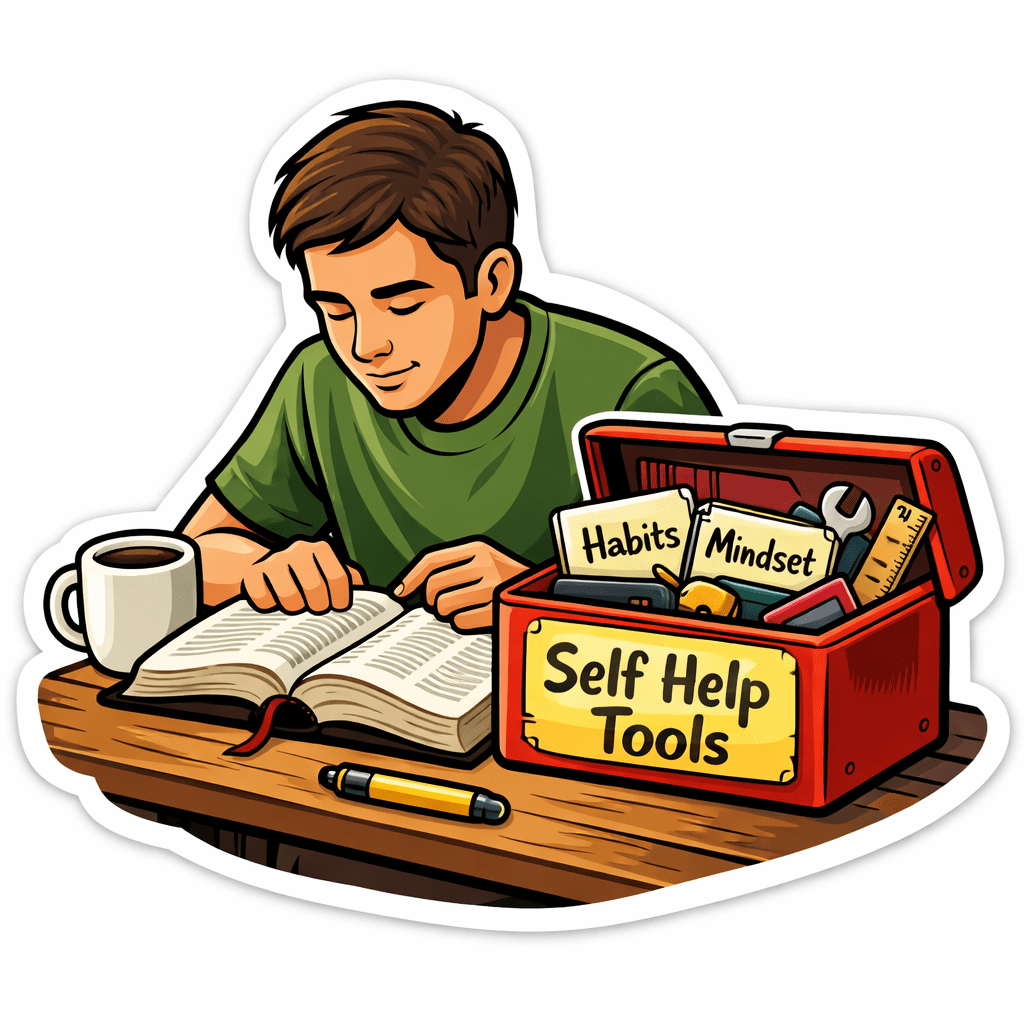
As someone who is convinced that Christianity is true, how do I approach self-help material?
Good question.
Many of the posts on my blog would be considered self-help. I share what I have learned from books, other people, and personal experience on habits, routines, thinking well, responding well, setting and achieving goals. These ideas have been helpful to me and, I hope, they are helpful to others.
In that sense, there is much to applaud within the self-help space. There is a lot of available wisdom if we will learn and apply it.
Yet, I have some concerns.
- We Are Limited
One concern I have is that some strains of self-help material seem to suggest that if you believe deeply enough, try hard enough, you can manifest anything in your life. There are no limits as long as you know the “secret”, etc. You can achieve anything.
This isn’t all self-help material, but it is easy to find in the genre. The best self-help material acknowledges our limits. There is much that is out of our control. Wars. Natural disasters. Diseases. Accidents. No amount of positive thinking can prevent or change this. We cannot guarantee our success.
Again, the best self-help material accepts this and encourages a resilience and adaptability that has us do the best we can, with what we have, where we are. That is noble and right.
One of the foundational teachings of Christianity is that we are not God. Sounds like an obvious point to make, but the Bible records a long history of humans trying to act like God and the terrible consequences that come from it. We are not God. We are finite creatures. Our control and our abilities are limited.
This is especially true spiritually. the Bible teaches that we are spiritually dead. We cannot help ourselves. We need Jesus to help us, to save us.
- Our Goals Are Not Primary
Another concern I have is that much of the self-help material is overly self-focused.
To a certain extent, this is understandable. The book is written for the person reading it. They are the one who will be acting on it. However, as a Christian, I believe that the most important questions do not start with us but with God.
Not: What do I want to do, accomplish, etc.?
But: What does God want me to do, accomplish, etc.?
The Bible doesn’t answer this question for every circumstance, but does answer it for some important ones. For example, our two primary goals should be to love God and love others. All our other goals, dreams, and plans should support those two goals.
This doesn’t mean that we ignore our own needs and desires. I don’t think that is God’s expectation of us. It does mean that our own needs and desires are not the starting point.
- There is More to Life Than This Life
A third concern with self-help material is that it focuses exclusively on this life.
Christianity teaches that there is a life that is beyond this life. That doesn’t mean we should ignore this life. This life matters. But we shouldn’t neglect the next life.
It is worth asking, “What we can know of the next life? Are there things we can or should do now that will influence the next life?” It would be incredibly unwise and short-sighted to think only of this life and not consider the next.
Keeping those three concerns in mind helps me navigate most self-help material.
I want to live my life on purpose in a way that honors God.
I want to love and serve others in a way that reflects the love of Jesus.
I want to accomplish some remarkable things along the way.
I want to live this life with the life to come in mind.
I will be able to do some of those things better by taking advantage of what I can learn from the best self-help material available.
P.S. Did you find this post helpful? If so, I have two quick requests:
— First, would you subscribe to the blog? It is an encouragement to me.
— Second, who is one person you think would also benefit from this post? Would you mind forwarding it to them?
Thank you!

 scott stonehouse
Leave a comment